
China’s multilateral diplomacy as U.S.-Western ties becomes strained

Introduction:
Chinese leadership began 2026 with increased diplomatic engagement with Western states and multilateral institutions, at a time where U.S. commitment to multilateralism seems to be waning. In recent weeks, China met with Ireland, the U.K., Finland, and the African Union (A.U.), framing these meetings, particularly those with Finland and the African Union, around support for international law, multipolar governance, and the important role of the United Nations. While China emphasized the importance of rules-based multilateralism and strengthened relationships with numerous Western states, the U.S. appeared to do the opposite. Washington has completely withdrawn from the World Health Organization and endangered its relationships with the European Union and N.A.T.O., by undermining Danish sovereignty through demands over the acquisition of Greenland. The actions of both China and the U.S. in recent weeks are in stark contrast with one another, China is building diplomatic bridges, while the U.S. weakens their alliances. This highlights the priorities of both countries and the possibility of a future reshuffling of the global order, as American leadership continues to be questioned. Of course, China’s diplomatic engagements are also strategic, but they raise questions regarding global leadership, multipolarity, and the future organization of the international system.
African Union:
On January 8th, 2026, “Foreign Minister Wang Yi and Chairperson of the African Union Commission Mahmoud Ali Youssouf jointly held the ninth China-AU Strategic Dialogue at the AU headquarters in Addis Ababa”. The traditional meeting is now central to China’s strategic diplomacy with the Global South, with topics such as sovereignty, cooperation, and development discussed. Furthermore, projects such as the China-Africa Year of People-to-People Exchanges emphasize that the Chinese African relationship is not solely based on economic incentives, as these initiatives help foster long term cooperation. China’s relationship with the A.U. is particularly significant, as it now seems to have broader, more visible influence in the continent compared to the U.S., increasing China’s power in global governance. Regarding multilateral institutions, African states have argued that their interests are underrepresented, particularly in financial bodies and the U.N. Security Council. However, China’s influence can help them advocate for further representation and inclusivity. Again, this is a strategic relationship for China, who may not always have Africa’s best interest in hand i.e. debt-trap diplomacy. Nevertheless, this partnership greatly differs from Western approaches to Africa, which often focuses on bilateral aid.
Finland and the UN:
China’s diplomacy is not only focused on multilateral institutions such as the African Union, instead it chooses to compliment institutionalism with bilateral relations. In January, Chinese leadership met with several Western European states, most notably, at least with regards to multilateral discourse, Finland. Following China’s, meeting with the A.U., Chinese President Xi Jinping met with Finnish Prime Minister Petteri Orpo in Beijing on the 27th of January. During the meeting, President Xi highlighted China’s commitment “to firmly uphold the international system with the United Nations”. alongside supporting international law “to promote an equitable and orderly multipolar world”. This commitment is especially significant given that it was made in a meeting with Finland, a relatively small state heavily reliant on international law and multilateral institutions, particularly due to its proximity with its much larger neighbor, Russia. Multilateral institutions such as the U.N. have been used to constrain unilateral power, particularly following the end of the Cold War. China’s support for the U.N. aligns itself with the institution-based system, rather than to rise against and disrupt it. Furthermore, Prime Minister Orpo outlined that China could help address the war in Ukraine, recognizing the increasing importance of China’s diplomatic capabilities. The idea of China being a mediator in bringing the conflict to an end outlines their growing bargaining power, especially as U.S. influence may be waning.
The U.S. Contrast:
As we can see, China’s recent bilateral and multilateral diplomatic engagements differ greatly from the alliance threatening actions the US has taken recently. In January alone, the U.S. attacked Venezuela, capturing its President Nicolas Maduro, threatened further action in Colombia and Cuba, before escalating demands to purchase Greenland from Denmark. Such actions have sparked debate in both South American and N.A.T.O. countries, questioning America’s commitment to multilateralism. Europe in particular is concerned, with its defense largely intertwined with N.A.T.O.-U.S. discourse on funding and burden-sharing linked to Greenland has put a strain on the Transatlantic alliance. For now, N.A.T.O. remains intact, but Europe is assessing its options by building up its own E.U. defense and diversifying its strategic partnerships. Furthermore, U.S. withdrawal from multilateral initiatives such as the Paris Climate Agreement and the World Health Organization indicates a potential American withdrawal from global leadership. In the background, China is quietly working to build relationships, while also simultaneously emphasizing the importance of institutional legitimacy and multilateral norms.
Rhetoric vs reality:
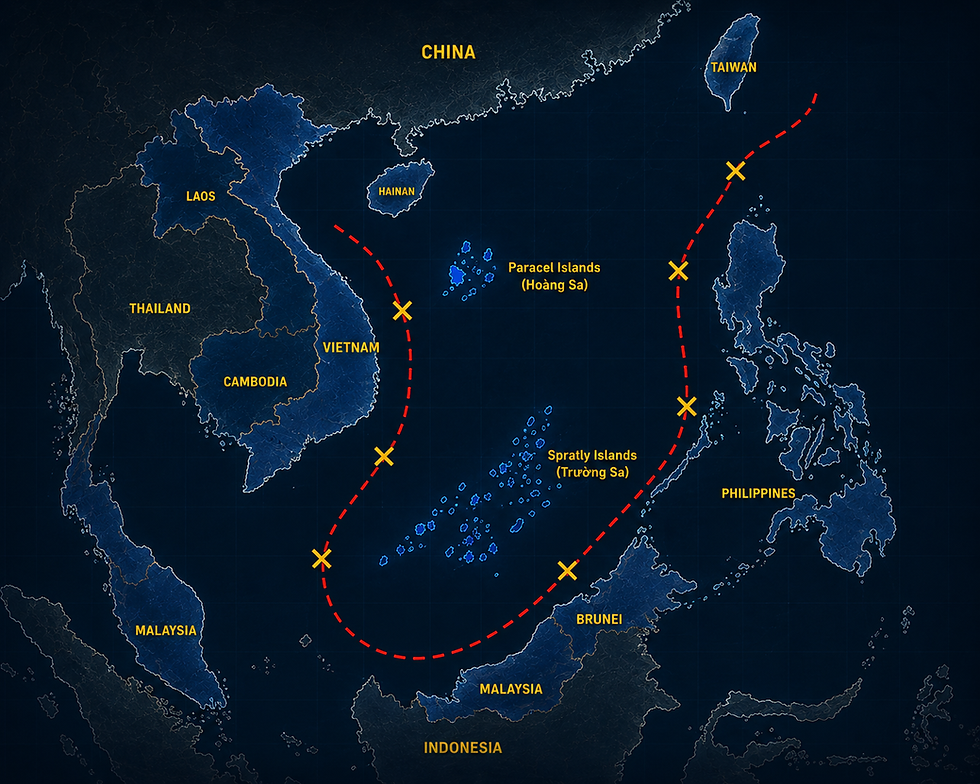
Of course, it would be naïve to suggest that China doesn’t have its own geopolitical agenda despite its attempt to build bridges and support multilateral organizations such as the U.N. Critics of China point towards its several contradictions, such as its human rights record and its assertive stance in the South China Sea i.e. Taiwan. Therefore, China’s approach to institutional order is somewhat conditional. It supports multilateral organizations, not only as a matter of principle, but as a means of shaping such institutions to benefit Chinese interests. Nevertheless, China’s consistent approach as a protector of global institutions is positive to see for other states, especially as U.S. foreign priorities seem to often shift.
Conclusion:
To conclude, recent diplomatic efforts made by China highlights its efforts to portray itself as a builder of the global system, rather than a destroyer. China’s emphasis on supporting global and regional institutions strengthens its relationship with Europe, and thus increases Chinese influence, at a critical time where American influence is in distress. Beijing’s messaging compliments this, by positioning China, not as a replacement to the U.S. as the hegemonic power, but instead as an alternative option, creating a world system that is not so much unipolar but multipolar. Whether China is sincere on this claim is uncertain. What is also uncertain is whether this strategy will work. That depends on whether China can align its controversial actions with the rules-based order it professes to support, and whether the U.S. chooses to take a more assertive stand at global leadership and return to progressive dialogue with the multilateral system it once dominated.
Sources:
China’s Xi Jinping signals deeper ties with Finland during PM’s visit | International Trade
News | Al Jazeera
China and the African Union Hold Strategic Dialogue_Ministry of Foreign Affairs of the
People's Republic of China
Trump’s foreign policy mapped: Every country US has attacked or threatened in 12
months | The Independent


Comments